The best toddler learning activities at home are short, hands-on and made from things you already own. A muffin tin, some socks, a few crayons and a laundry basket can teach colors, counting, sorting and new words. Below are 25 easy ideas grouped by skill, with simple tips for 2- and 3-year-olds and no fancy supplies required.
Toddlers learn by touching, moving, talking and repeating. You don't need a lesson plan. You just need a few minutes and a willing little helper.
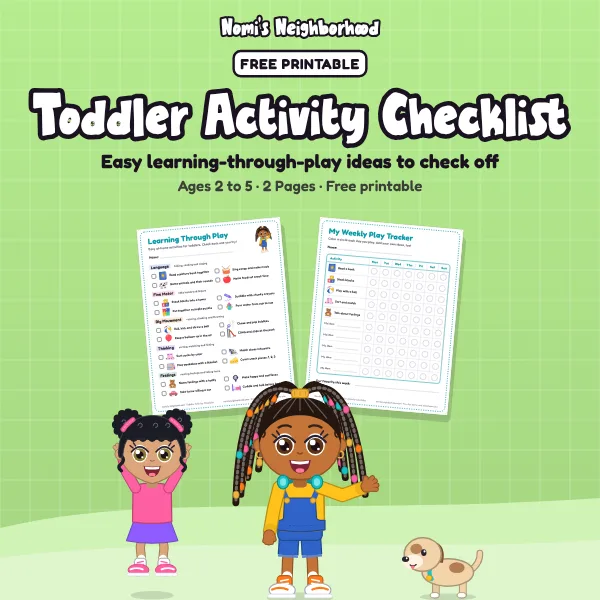
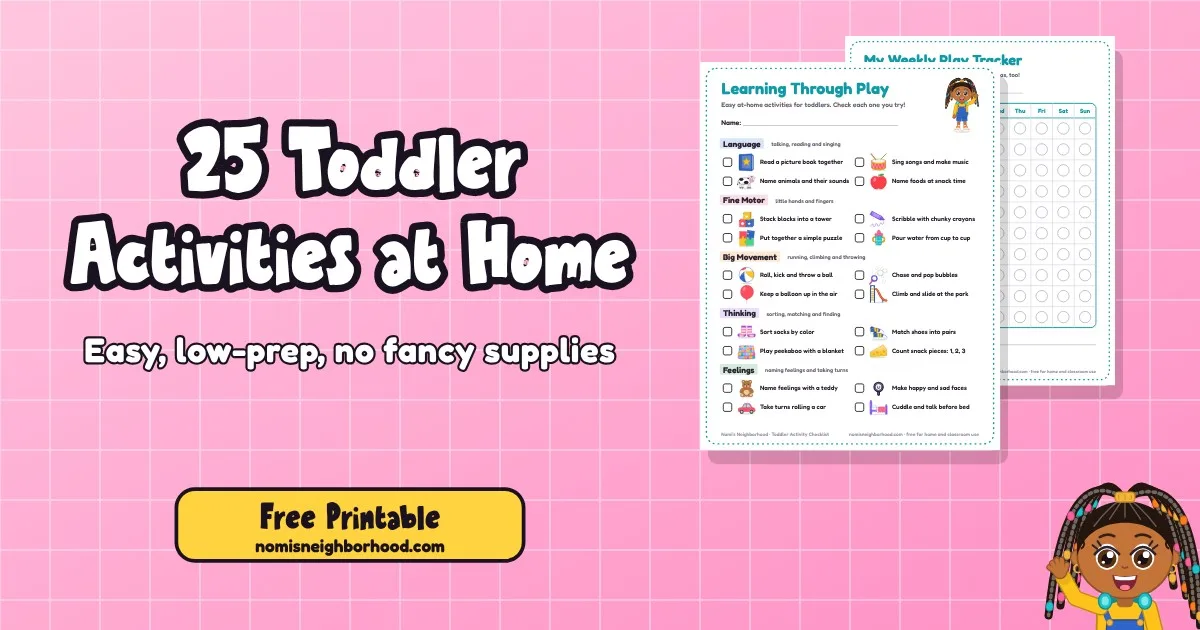
Toddler Learning Activity Checklist
Download FreeBefore You Start: A Few Quick Tips
- Keep it short. Five to ten minutes is a win for most toddlers.
- Follow their interest. If they want to stack the cups instead of sort them, that's still learning.
- Talk a lot. Name colors, count out loud and describe what you see.
- Repeat favorites. Toddlers love doing the same thing many times. That's how skills stick.
- Watch small parts. Pom-poms, beads and dry beans should only be used with close supervision.
Colors and Sorting Activities
1. Muffin Tin Color Sort
Put a colored paper circle in each cup of a muffin tin. Hand your toddler a pile of toys or pom-poms to sort by color.
2. Sock Matching
Dump clean socks on the floor and find pairs together. It's sorting, matching and laundry help all at once.
3. Color Hunt
Pick one color and walk around the house finding things that match. Put them all in a basket.
4. Ice Cube Painting
Freeze water with a drop of food coloring in an ice cube tray. Let your toddler "paint" on paper as the cubes melt.
5. Big and Little Sort
Gather a few big and little versions of the same item, like spoons or shoes, and sort them into two piles.
For more color ideas, see our guide on how to teach colors to toddlers.
Counting and Early Math Activities
6. Count the Stairs
Count each step as you go up and down. It's the easiest daily counting practice there is.
7. Snack Counting
Count out crackers or berries before eating them. "One, two, three... now you can eat one!"
8. Toy Car Parking Lot
Draw parking spots on cardboard and number them 1 to 5. Your toddler parks a car in each spot.
9. Stacking Cups Tower
Stack cups or blocks and count each one. Then knock it down and count again.
10. Clothespin Count
Clip clothespins on the edge of a box or paper plate and count them as you go. Great for little hands too.
Want more? Check out our list of counting activities for toddlers.
Letters and Language Activities
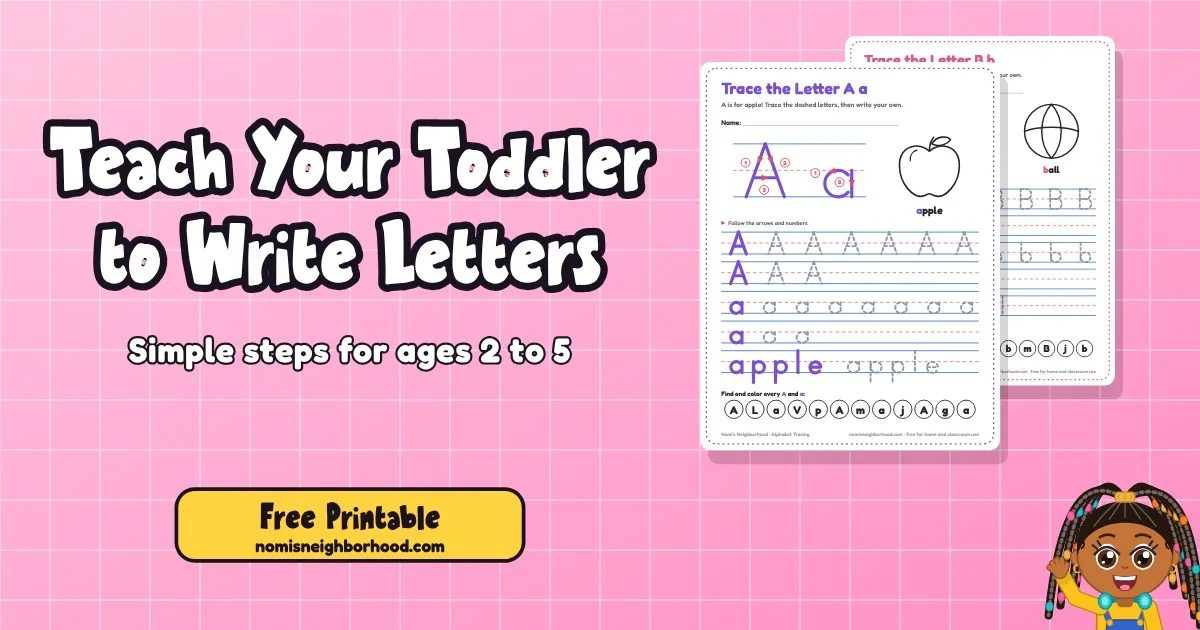
11. Letter Hunt in Books
Pick the first letter of your child's name and look for it in a favorite book.
12. Name That Sound
Make animal sounds and let your toddler guess the animal. Then switch roles.
13. Narrate Your Day
Talk through what you're doing: "I'm cutting the apple. It's red. Now it's in two pieces." This builds vocabulary without any setup.
14. Sing the Alphabet
Sing the ABC song while washing hands or riding in the car. Add a silly voice to keep it fun.
15. Picture Book Questions
While reading, point and ask, "Where's the dog?" or "What color is the hat?"
Fine Motor Activities
16. Playdough Squish
Roll, squeeze, poke and flatten playdough. It builds the hand strength kids need for writing later.
17. Sticker Line-Up
Draw a line on paper and have your toddler place stickers along it. Peeling stickers is great finger work.
18. Pom-Pom Drop
Cut a hole in the lid of a container and let your toddler push pom-poms through it.
19. Tape Rescue
Tape small toys to a tray with painter's tape. Your toddler peels the tape to "rescue" them.
20. Spoon Transfer
Use a spoon to move dry pasta from one bowl to another. Spills are part of the fun.
We have even more ideas in our post on fine motor activities for toddlers.
Movement and Gross Motor Activities
21. Pillow Path
Line up couch cushions and pillows on the floor to make a path to walk, crawl or hop across.
22. Freeze Dance
Play music and dance. When the music stops, everybody freezes.
23. Laundry Basket Toss
Toss balled-up socks into a laundry basket. Count how many make it in.
24. Animal Moves
Hop like a frog, waddle like a duck, stomp like an elephant. Toddlers love guessing the animal too.
Pretend Play and Life Skills
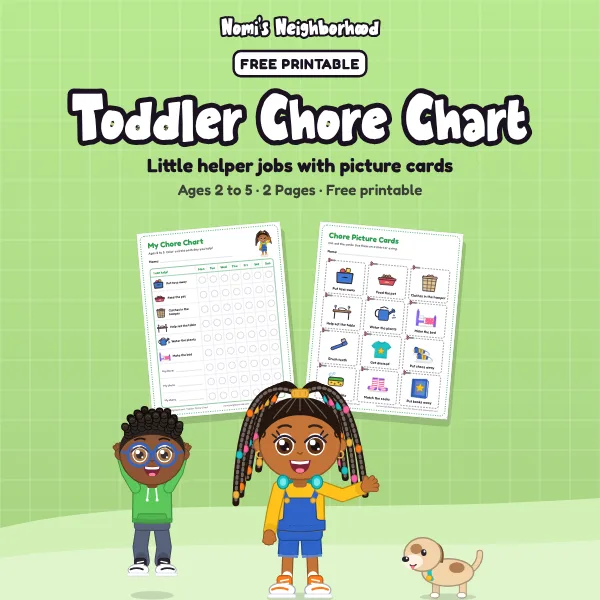
25. Little Helper Jobs
Let your toddler help with simple jobs like wiping the table, putting spoons in the drawer or feeding the pet. Real jobs build confidence and teach following directions.
Activities by Age
For 2-Year-Olds
Stick with big, simple tasks: color hunts, stacking cups, sock matching, playdough and freeze dance. Expect lots of repeating and some wandering off. That's normal.
For 3-Year-Olds
Add a little more challenge: muffin tin sorting with more colors, counting to 10, letter hunts and spoon transfers. Three-year-olds often enjoy simple rules and "helping" games.
Mixing in Screen Time That Teaches
Some days you need a few minutes to make dinner. A short, calm learning video can be a nice fit, especially when you talk about it afterward. Nomi's episodes, like "Duck Pond Day" with animal sounds and counting, pair well with activities on this list. You can watch Nomi on YouTube, then try the animal moves game together.
How to Keep It Going All Week
The hardest part of at-home learning is remembering what to try next. A simple plan helps:
- Pick three activities each morning.
- Set out the supplies the night before.
- Rotate between colors, counting, letters and movement.
- Repeat the ones your child loves.
- Check them off as you go.
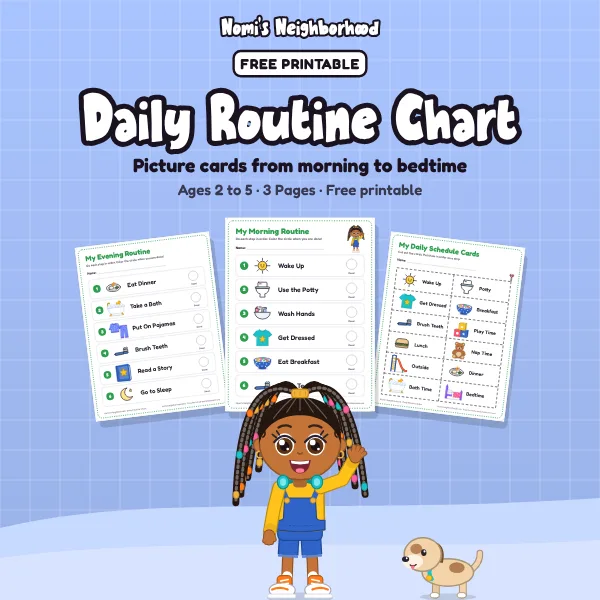
That last step is what our free checklist is for. It keeps ideas in one place and shows you how much your toddler is doing.
Toddler Learning Activity Checklist
Download FreeFAQ
What are good learning activities for a 2-year-old at home?
Simple, hands-on play works best: color sorting, stacking and counting blocks, playdough, reading picture books and dancing. Keep activities short and repeat favorites often.
How much time should I spend on learning activities with my toddler?
There's no set rule. Many toddlers do well with a few short activities spread through the day, each lasting five to ten minutes. Everyday moments like cooking and laundry count too.
Do toddlers need structured learning at home?
Toddlers learn mostly through play, talking and everyday routines. A little structure, like picking a few activities each day, can help parents stay consistent without making it feel like school.
What household items can I use for toddler activities?
Muffin tins, socks, cups, spoons, painter's tape, laundry baskets, cardboard boxes, dry pasta and playdough all make great learning tools.