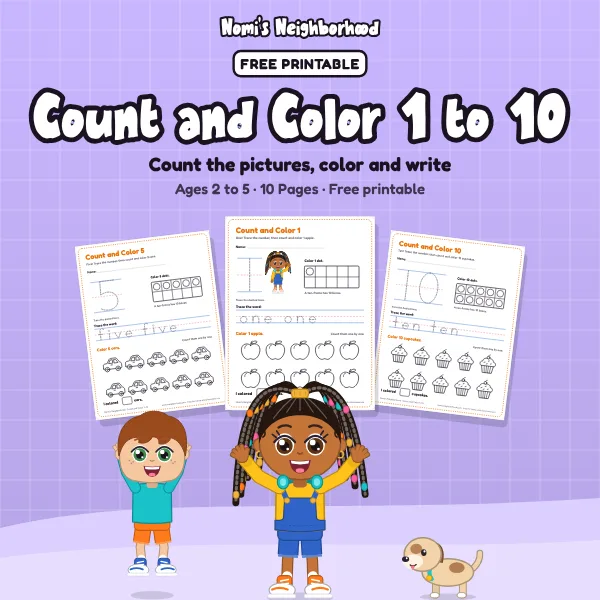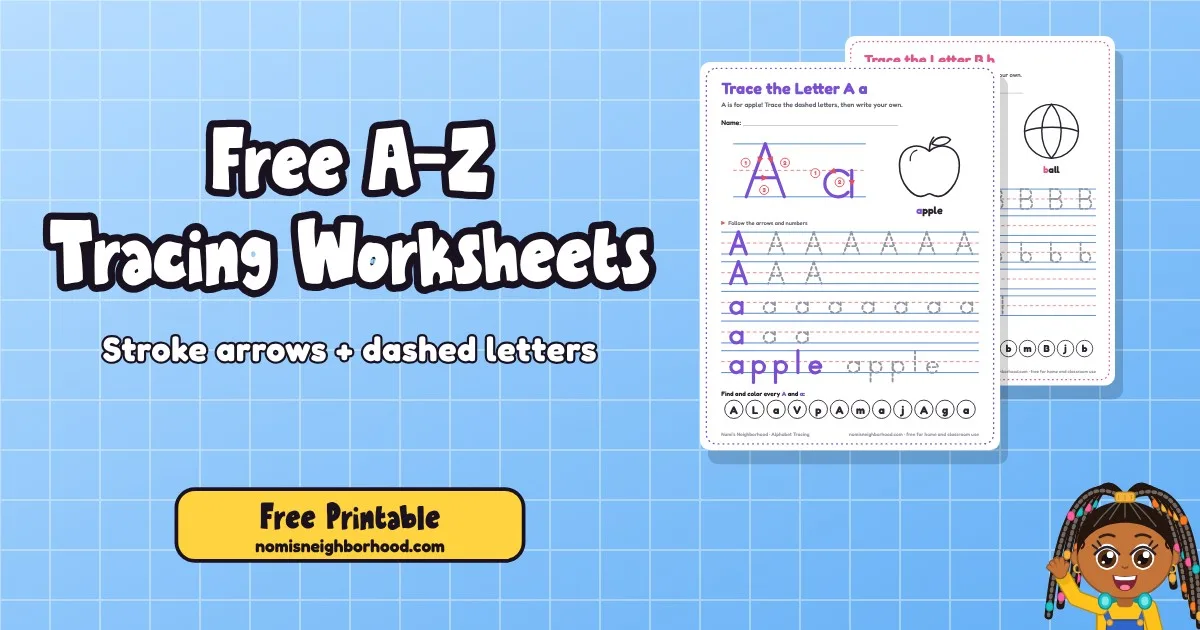
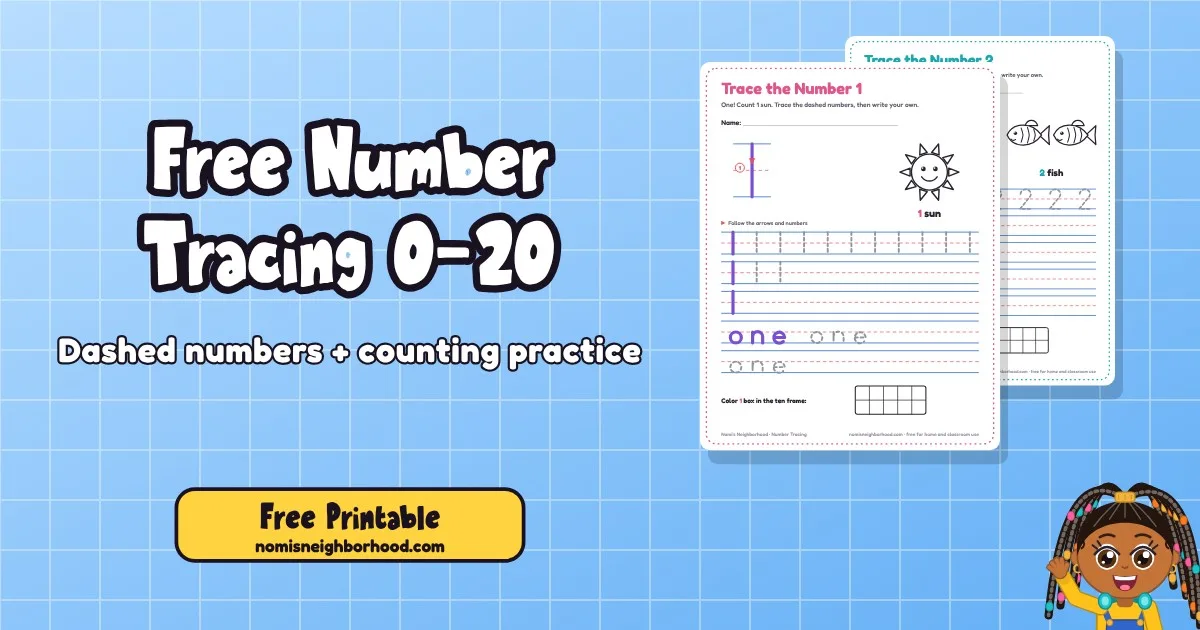
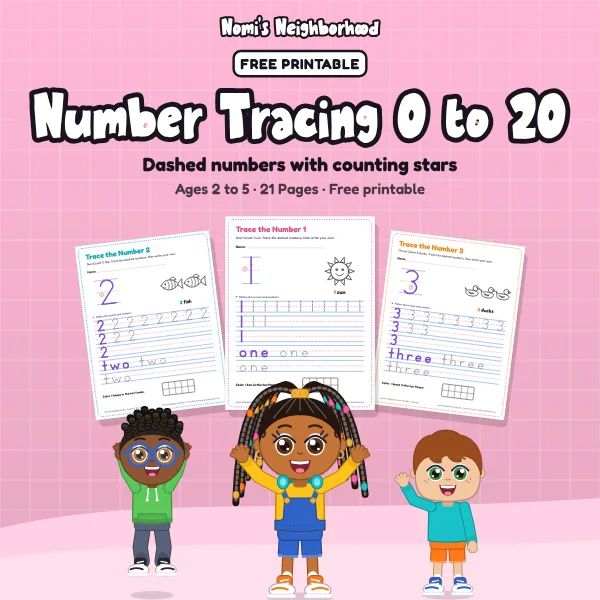
Number tracing worksheets 1-20 help preschool and kindergarten students learn how to form each numeral while connecting it to a real amount. Our free set covers 0 through 20, with numbered stroke arrows on a big model number, dashed numbers on handwriting lines, and a simple counting row so kids see what each number means. Below you'll find teaching tips, a smart order for introducing numbers, and ways to use the pages in centers and small groups.
Tracing is just one piece of number sense, but it's an important one. Kids who form numbers the same way every time tend to write them faster and more clearly later.
Number Tracing Worksheets 0–20
Download FreeWhat's on Each Number Tracing Page
Every page in the set follows the same layout:
- A big model number for finger tracing.
- Dashed numbers on handwriting lines to trace, after kids follow the numbered arrows on the big number.
- A counting row with stars to count and color.
- A space to write it alone once kids feel ready.
Keeping the layout the same means students can work more on their own. After a few pages, they know exactly what to do.
The Three Tracing Rules
We use the same rules for numbers as we do for letters:
- Start at the top of the number.
- Go top to bottom.
- Go left to right.
Almost every number starts at the top. That one habit fixes a lot of common problems, like a 9 that starts at the bottom or an 8 drawn as two stacked circles.
How to Teach Number Formation, 0 to 9
Saying a short phrase while kids trace helps them remember the motion. Here are simple ones you can use or change to fit your class:
- 0: Start at the top, curve around and back up to the start.
- 1: Start at the top, straight line down.
- 2: Curve around like a hook, slant down, line across.
- 3: Curve around, curve around again.
- 4: Line down, line across, then a big line down through it.
- 5: Line down, curve around, then add the hat across the top.
- 6: Curve down and loop around.
- 7: Line across, slant down.
- 8: Make an S, then go back up to close it.
- 9: Circle first, then line down.
Some programs teach 5 starting with the top line. Either way is fine. What matters is that your whole class uses the same steps so kids aren't confused.
Teaching Teen Numbers (11 to 20)
Teen numbers are tricky because of how we say them. We say "fourteen," and the "four" comes first, but we write the 1 first. Kids often write 41 instead of 14.
A few ways to help:
- Show the ten. Use a ten frame or a bundle of ten craft sticks. Say, "Fourteen is one ten and four more."
- Point to the 1 first. Remind kids the 1 always stands for the ten, so it goes first.
- Trace slowly. Let children trace the 1, pause, then trace the second digit.
- Count with objects. Have kids count out 14 counters onto a mat after tracing.
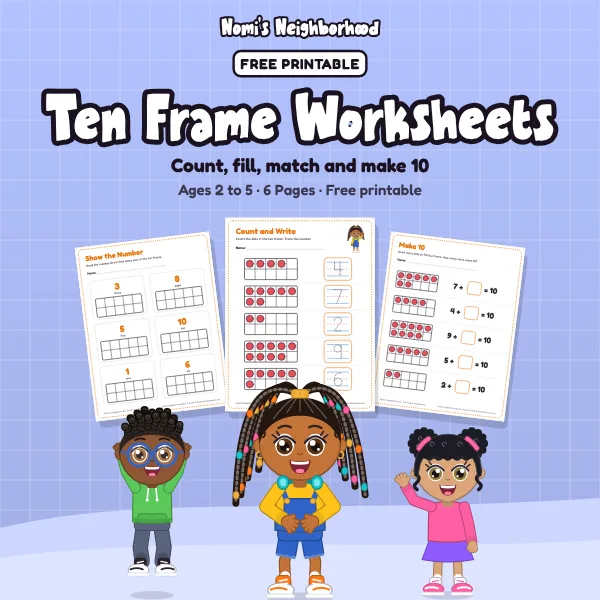
Ten frames are a great match for teen numbers. You'll find lots of ideas in our post on ten frame activities.
A Smart Order for Introducing Numbers
You can go in order from 0 to 20, but some teachers group them by stroke type for early wins:
Start With Straight Lines
1, 4, 7
Add Curves
0, 2, 3, 5, 6, 9
Finish With the Trickiest
8 and then the teen numbers
Whatever order you pick, keep counting in order during group time so kids still learn the number sequence.
Ways to Use Number Tracing Worksheets in Class
Math Centers
Put a bin of tracing pages at your math center with crayons and counters. Kids trace a number, then count out that many objects onto the page.
Morning Work
A single tracing page is a calm way to start the day. It gives early arrivers something to do while others unpack.
Small Group Practice
Work with 3 or 4 children at a time. This is the best way to catch reversals and start-point habits early.
Dry-Erase Station
Slide pages into sheet protectors. Kids trace with dry-erase markers, wipe and try again.
Number of the Day
Pick a number, trace it together, count that many claps or jumps, and find that number around the room.
Make It Hands-On
Numbers stick better when kids move and touch. Pair tracing with:
- Writing numbers in a sand or salt tray
- Building numbers with playdough
- Counting snacks into a muffin tin
- Hopping on a number line made from painter's tape
- Matching number cards to sets of objects
Songs help too. Nomi's "Welcome to My Neighborhood" episode includes counting practice that works well as a quick warm-up before math. You can watch Nomi on YouTube with your class.
For younger learners or a gentler start, our post on counting activities for toddlers shares playful ideas that also work with 3-year-olds.
Differentiating by Age
3-Year-Olds
Focus on 0 to 5. Use finger tracing and the first dashed row only. Lots of counting with real objects.
4-Year-Olds
Work through 0 to 10. Watch start points and celebrate effort. Introduce the idea of "one ten" when you get close to 10.
5-Year-Olds and Kindergarten
Move through 11 to 20. Focus on getting the 1 first in teen numbers. Challenge kids to write numbers from memory.
Handling Number Reversals
Reversals, like a backward 3 or a backward 7, are very common in preschool and kindergarten. They usually fade with practice. You can help by:
- Modeling the number every time
- Saying the stroke phrase out loud
- Placing a small number line on each table for reference
- Praising the effort, then showing the correct shape once
There's no need to mark every reversal as wrong. Gentle, steady modeling works better.
Number Tracing Worksheets 0–20
Download FreeFAQ
What age should kids start tracing numbers?
Many children are ready to trace numbers 0 to 5 around age 3 or 4, once they can draw lines and circles. Most kindergarten students work on writing numbers to 20.
Why does my student write numbers backward?
Number reversals are a normal part of learning to write in preschool and kindergarten. Consistent modeling, stroke arrows and a number line on the table usually help them fade over time.
Should preschoolers learn to write numbers to 20?
Preschoolers usually focus on numbers to 10. Teen numbers are often introduced in pre-K and practiced more in kindergarten, especially with ten frames and counting objects.
How do I teach the difference between 14 and 41?
Show that 14 means one ten and four more using a ten frame or bundles of sticks. Remind kids that the 1 stands for the ten, so it is always written first in teen numbers.