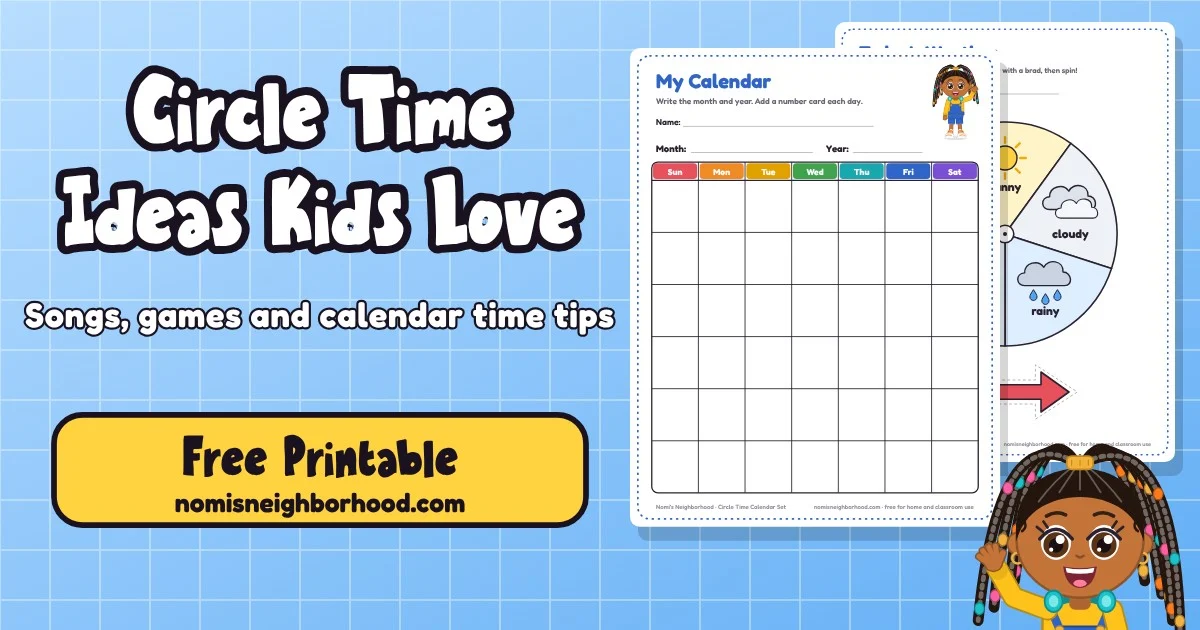
The best circle time ideas for preschool are short, predictable and full of movement. Plan for about 10 to 15 minutes, open and close with the same song every day, and mix one quiet learning activity with one chance to wiggle. When circle time follows a steady pattern, little ones know what is coming and settle in faster.
If your group melts down by minute eight, you are not doing it wrong. Three- and four-year-olds are built to move. The goal is not a perfectly still rug. It is a warm, shared moment that starts the day together.
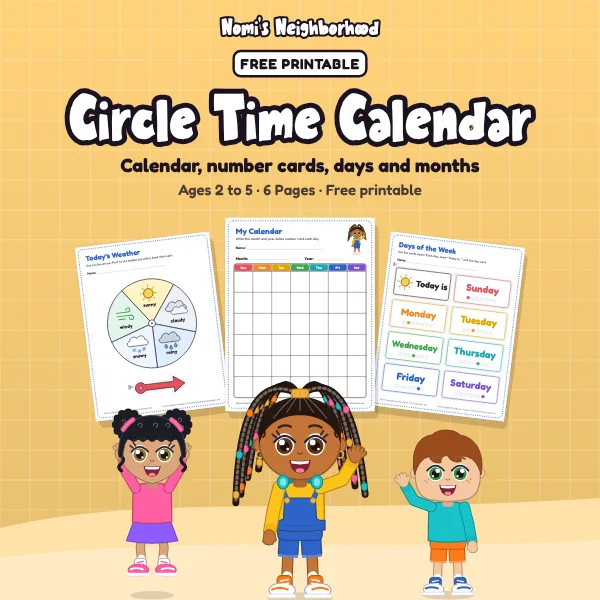
Circle Time Calendar Set
Download FreeHow Long Should Circle Time Be in Preschool?
A good rule of thumb is to keep circle time short and let it grow with your group. Here is a simple guide by age:
- Age 2: 5 to 10 minutes. Two songs, one short book or puppet moment, and done.
- Age 3: 10 to 15 minutes. Add a simple calendar or weather check.
- Ages 4–5: 15 to 20 minutes. Kids can handle a short discussion, a game and a job chart.
Watch your group, not the clock. If kids start rolling around, that is your cue to stand up, sing a movement song or wrap up. Ending on a high note is always better than pushing through.
A Simple Circle Time Routine That Works
Predictability is what makes circle time feel calm. Try this order and keep it the same for a few weeks before you change anything.
- Gathering song. Use the same song every day so it becomes the signal to come to the rug.
- Hello time. Greet each child by name. A wave, a high five or a silly voice all count.
- Calendar and weather. Point to the day, count the days so far, and pick a weather card.
- Main activity. One short lesson: a book, a letter of the week, a counting game or a feelings check-in.
- Movement break. A song with actions, a stretch or a quick freeze dance.
- Goodbye song. Close the same way every time, then send kids to centers or the next activity.
That is six small pieces. None of them takes long, and kids always know what comes next.
Circle Time Ideas for Preschool: Greetings and Songs
Name Songs
Kids love hearing their own name. Sing a simple tune like "Where is Maya? Where is Maya? Here I am!" to the melody of "Frère Jacques." It builds belonging and helps shy kids take part without pressure.
Greeting Choice Board
Post three or four pictures: wave, high five, fist bump, hug. Each child points to how they want to be greeted. This teaches body autonomy and gives every child a quick turn.
Movement Songs
Pick songs with clear actions. Clapping, stomping, jumping and spinning give bodies a job so minds can focus afterward. Alphabet and shape songs work well here too. Nomi's "ABC Bounce" and "Shape Bounce" songs were made for this kind of bouncy break, so you can watch Nomi on YouTube and play one on your classroom screen when the group needs to move.
Calendar and Weather Time Ideas
Calendar time can drag if it turns into a long lecture. Keep it hands-on and quick.
- One helper, one job. Let the calendar helper move the day card while the group says the day out loud.
- Count the days. Add one straw or sticker per school day. Bundle straws into tens later in the year.
- Weather window. Have the weather helper look outside and choose sunny, cloudy, rainy, windy or snowy.
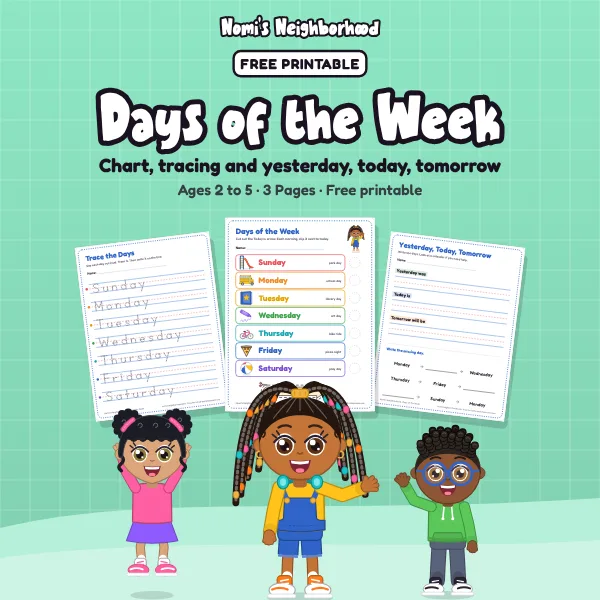
- Yesterday, today, tomorrow. For 4- and 5-year-olds, add three cards and say all three in a chant.
If you want more ideas for this part of the morning, our post on days of the week activities has songs and charts that fit right into circle time.
Interactive Circle Time Games
Games keep kids looking up instead of looking at their shoes. Here are a few that need almost no prep.
Mystery Bag
Put one object in a cloth bag. Give three clues ("It is round. It is red. You can eat it."). Kids guess, then you reveal it. This builds vocabulary and listening skills.
Pass the Shape
Pass a paper shape around the circle while music plays. When the music stops, the child holding it names the shape or finds something in the room with the same shape.
What's Missing?
Lay out four objects. Kids close their eyes, you hide one, and they guess what is missing. Start with three objects for younger groups.
Feelings Check-In
Hold up a picture of a face and ask, "How does this friend feel?" Then invite kids to show their own feeling with their face or a thumbs up or down. Our feelings activities for toddlers post has more simple emotion games you can borrow.
Counting Claps
Say a number and the group claps that many times. Then try stomps, jumps or pats on the knees. It is counting practice disguised as fun.
Tips for Keeping Little Ones Engaged
Even the best plan needs a few tricks for real-life wiggles.
- Use sit spots. Carpet squares, tape shapes or name cards give each child a clear place to sit.
- Give hands a job. Let kids hold a fidget, a small stuffed animal or a picture card during listening time.
- Invite, don't require. If a child needs to sit at the edge of the rug or on a chair, that is okay. Being near the group still counts.
- Keep your voice playful. Whispering, singing and silly voices pull attention back better than repeating "criss-cross applesauce."
- Switch it every few minutes. Sit, stand, sit again. Movement between activities resets focus.
- Use visuals. Picture cards for the routine show kids what comes next, which helps those who struggle with change.
Circle Time Ideas by Season
Fresh themes keep the routine from feeling stale while the structure stays the same.
- Fall: Leaf counting, apple taste tests, and a thankful share during Thanksgiving week.
- Winter: Mitten matching, snow weather cards and a "hot or cold" sorting game.
- Spring: Planting seeds, bug hunts with picture cards and rain songs.
- Summer: Beach ball questions (each color stripe has a question) and ice melting predictions.
Swap the theme, keep the routine. Kids feel safe and you still get variety.
Planning Circle Time Into Your Week
Circle time works best when it ties into the rest of your day. If your letter of the week is B, read a B book at circle and hide B objects in the mystery bag. If your theme is shapes, do the shape pass game.
A weekly plan makes this easy. Our free preschool lesson plans post walks through a simple template so circle time, centers and small groups all connect.
Circle Time Calendar Set
Download FreeFAQ
What do you do during circle time in preschool?
Most preschool circle times include a greeting song, calendar and weather, one short lesson like a book or counting game, a movement break and a goodbye song. Keep the order the same each day so kids know what to expect.
How long should circle time be for 3-year-olds?
About 10 to 15 minutes is a good starting point for 3-year-olds. Watch your group and end early if attention fades. A short, happy circle time beats a long, restless one.
How do I keep toddlers engaged during circle time?
Use songs with actions, give each child a sit spot, keep each activity to a few minutes and add a movement break in the middle. Saying each child's name during hello time also helps them feel included.
Is circle time necessary in preschool?
It is not required, but many teachers find it a helpful way to build community, practice listening and introduce the day's theme. If a full circle time does not fit your group, a short morning meeting with one song and one activity works too.