Part of our Feelings and Kindness learning hub: more printables, guides and episodes on this topic.
The best gratitude activities for kids make thankfulness concrete. Young children understand gratitude when they can see it, say it and do it, so try a thankful tree, a daily "thank you" circle, simple helper jobs and thank-you drawings. Keep it short, model it yourself, and repeat it often so it becomes a habit.
Thanksgiving is a natural time to start, but these ideas work any month. Gratitude grows through small, everyday moments more than one big lesson.
Thankful Tree Printable
Download FreeHow to Teach Gratitude to Preschoolers
"Gratitude" is an abstract word. Preschoolers need it broken down into things they can understand.
- Use simple words. Say "thankful" or "glad we have." For example, "I'm thankful for my warm coat."
- Point to real things. Food, toys, friends, family, pets, sunshine. Concrete examples work best.
- Model it out loud. "I'm so thankful Miss Ana helped us clean up today." Kids copy what they hear.
- Connect it to feelings. Ask, "How did it feel when your friend shared?" Gratitude starts with noticing kindness.
- Repeat often. A quick thankful moment every day works better than one long lesson.
Gratitude Activities for Kids in the Classroom
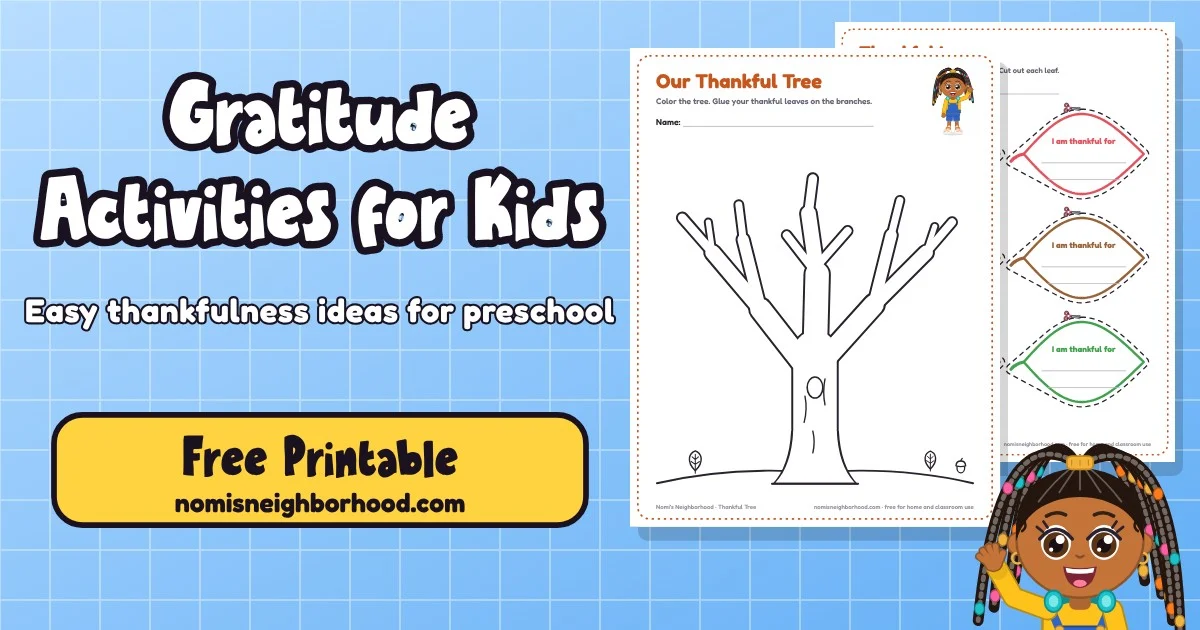
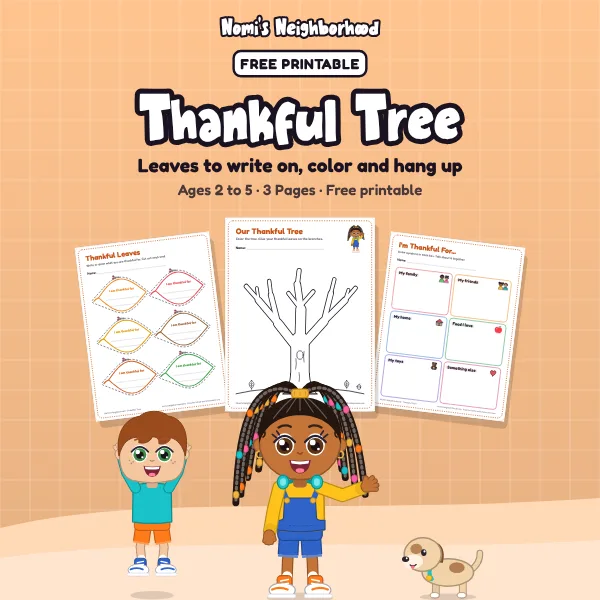
Thankful Tree
Put a bare paper tree on a wall or bulletin board. Each child gets a paper leaf. Ask, "What are you thankful for?" Write their answer on the leaf (or let older kids draw it) and add it to the tree. Add new leaves through the week and watch the tree fill up.
Thankful Circle
At circle time, pass a small object like a pumpkin or a stuffed turkey. Whoever holds it shares one thing they are thankful for. Kids can pass if they want to. Over time, even shy children often join in. Our circle time ideas for preschool post has tips for keeping this kind of sharing short and engaging.
Thank-You Drawings
Invite kids to draw a picture for someone who helps them, like a cook, a custodian, a bus driver or a family member. Help them write "Thank you" at the top. Then deliver the drawings together.
Gratitude Hunt
Give kids a simple picture list: something that keeps you warm, something that makes you happy, something you like to eat, someone who helps you. They find or point to examples around the room.
Thankful Turkey
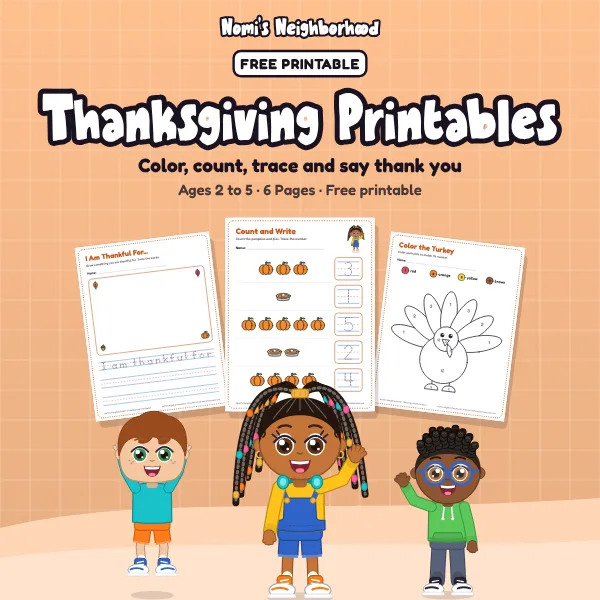
Each child colors a turkey body. They add paper feathers, one for each thing they are thankful for. It is a classic Thanksgiving craft that also builds counting and fine motor skills.
Helper Jobs
Gratitude is also about giving back. Assign simple class jobs and thank each helper by name. "Thank you, Jalen, for feeding our fish." Kids learn what it feels like to be thanked and to thank others.
Gratitude Games for Kids
Games keep the idea fun and light.
- I Spy Something I'm Thankful For. Take turns spotting things in the room you are glad to have.
- Thankful ABCs. For 4- and 5-year-olds, name something you are thankful for that starts with A, then B, then C. Skip tricky letters.
- Pass the Smile. Smile at the friend next to you and say, "Thank you for being my friend." Pass it around the circle.
- Thankful Freeze Dance. Dance to music. When it stops, freeze and call out something you are thankful for.
Gratitude by Age
Age 2–3
Focus on saying "thank you" and naming things they like. "You love your blanket. We are thankful for warm blankets." Keep it simple and positive. Saying "thank you" to your toddlers when they help, even with something tiny, shows them what gratitude sounds like.
Age 3–4
Kids can start sharing their own ideas in a thankful circle or on a thankful tree. Their answers might be funny, like "I'm thankful for my shoes," and that is perfect.
Age 4–5
Older preschoolers can begin to understand thanking people for actions, not just things. Try thank-you cards, helper jobs and talking about how kindness makes others feel.
Books and Stories About Thankfulness
Picture books are a gentle way to talk about gratitude. After reading, ask questions like:
- "What was the character thankful for?"
- "How did they say thank you?"
- "What are you thankful for today?"
You can also use familiar characters. In Nomi's neighborhood, friends and neighbors like Grandma Pearl, Mr. Rivera the mail carrier and Miss Rosie the baker are part of everyday life. After an episode, you might ask, "Who helps Nomi in her neighborhood? Who helps us in ours?" If you want an episode to start the conversation, you can watch Nomi on YouTube with your class.
Simple Gratitude Habits for Every Day
Gratitude sticks when it becomes routine. You do not need a big lesson plan. A few seconds here and there, repeated every day, will do more than one long Thanksgiving unit. Try one or two of these:
- Thankful moment at snack. Before eating, each child names one thing they are glad for.
- Goodbye thank-you. End the day by thanking the class for something specific.
- Gratitude jar. Write kids' thankful thoughts on slips of paper and add them to a jar. Read a few on Fridays.
- Notice kindness. When you see a child help someone, name it. "You helped Ava zip her coat. That was kind."
Connect Gratitude to Kindness
Gratitude and kindness go together. When kids notice the good things others do, they often want to do good things too. Our kindness activities for kids post has more ideas for building a caring classroom. For more Thanksgiving fun, check out our Thanksgiving activities for preschoolers with crafts, games and printables.
Thankful Tree Printable
Download FreeFAQ
How do you explain gratitude to a preschooler?
Explain gratitude as feeling glad about the good things and people in your life. Use simple words like "thankful," point to real examples, and model it out loud every day.
What is a thankful tree activity?
A thankful tree is a paper tree on a wall or table. Kids add leaves with words or drawings of things they are thankful for. It grows fuller over days or weeks, which helps kids see gratitude add up.
What age can kids understand gratitude?
Toddlers can learn to say "thank you" and name things they like. Many 4- and 5-year-olds start to understand thanking people for kind actions. Gratitude grows with practice and modeling.
What are easy gratitude crafts for kids?
Easy gratitude crafts include a thankful tree, a thankful turkey with feather notes, thank-you drawings for helpers and a gratitude jar. All of them use simple supplies like paper, crayons and glue.