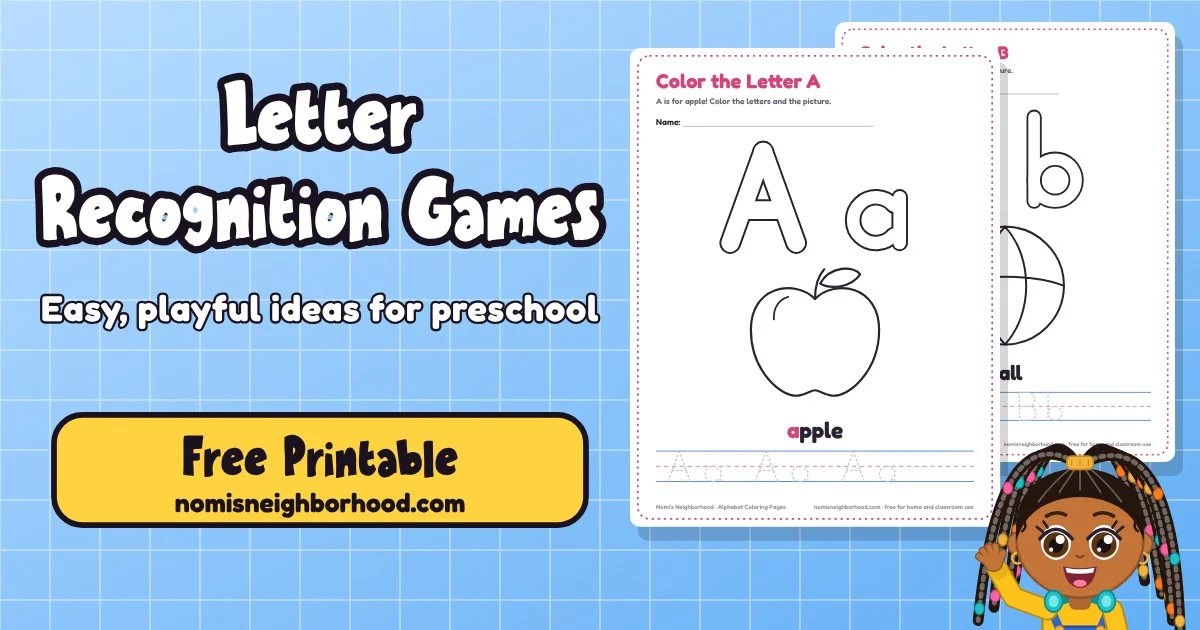
Part of our Early Literacy learning hub: more printables, guides and episodes on this topic.
Letter recognition activities help preschoolers learn to name and identify letters by sight. The most effective ones are short, playful and hands-on: letter hunts, matching games, sensory bins and songs. Teach a few letters at a time, revisit them often, and connect each letter to names and words kids already care about.
Letter recognition is one of the strongest building blocks for early reading. The good news is that it does not require worksheets all day. Games and movement do a lot of the work.
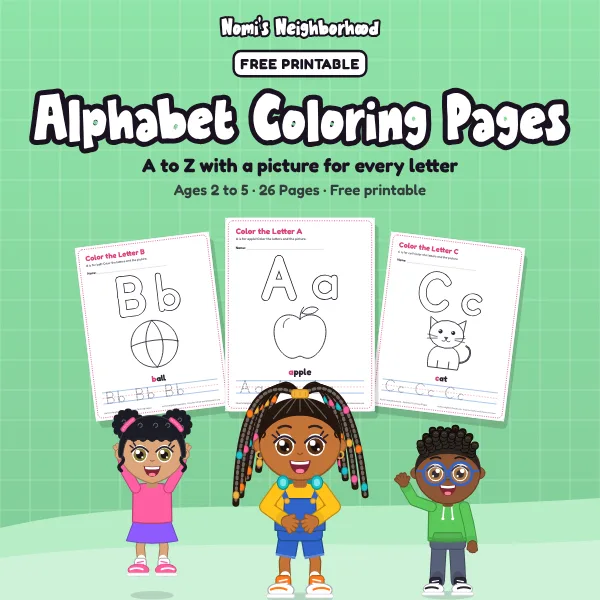
Alphabet Coloring Pages
Download FreeHow to Teach Letter Recognition in Preschool
Before jumping into activities, a few teaching tips make everything work better.
- Start with names. The letters in a child's own name are the most meaningful. Many kids learn the first letter of their name before any other.
- Teach letters that look different first. Pairs like b and d, or p and q, are easy to mix up. Spread them apart in your plan.
- Pair uppercase and lowercase. Introduce both forms, but expect uppercase to come a little faster for many kids.
- Connect the name and the sound. Say "This is B. B says /b/." Letter names and sounds support each other.
- Review constantly. Short daily review beats one long lesson per week.
Letter Recognition Activities for Whole Group
Letter of the Day Hunt
Show the letter at circle time. Then ask kids to spot it around the room: on the calendar, on name tags, on book covers. Keep a tally of how many you find together.
Alphabet Song With Pointing
Sing the alphabet song while pointing to each letter on a chart. Slow it down so kids can track. Nomi's "ABC Bounce" song is a good one for this, since it gives each letter its own beat. You can watch Nomi on YouTube and pause on letters your group is working on.
Stand Up If...
Say, "Stand up if your name starts with M!" Kids who match pop up. Then everyone says the letter together. It is quick, active and very personal.
Mystery Letter
Slowly reveal a letter from behind a folder. Kids guess what it is as more appears. This trains them to notice the shapes that make each letter unique.
Letter Recognition Games for Centers
Sensory Bin Letter Dig
Bury magnetic or foam letters in rice, beans or sand. Kids dig one out, name it and place it on a matching alphabet mat. Add scoops and tongs for fine motor work.
Uppercase and Lowercase Matching
Write uppercase letters on paper cups and lowercase letters on pom-poms or bottle caps. Kids drop each lowercase letter in its matching cup. Start with five pairs, not twenty-six.
Letter Sorting
Give kids a mix of letters and a few sorting categories:
- Letters with straight lines (E, H, L)
- Letters with curves (C, O, S)
- Letters with both (B, D, P)
Sorting builds attention to letter features, which is exactly what recognition needs.
Playdough Letters
Kids roll playdough "snakes" and lay them over a letter card. Saying the letter name while they build helps it stick.
Alphabet Coloring Station
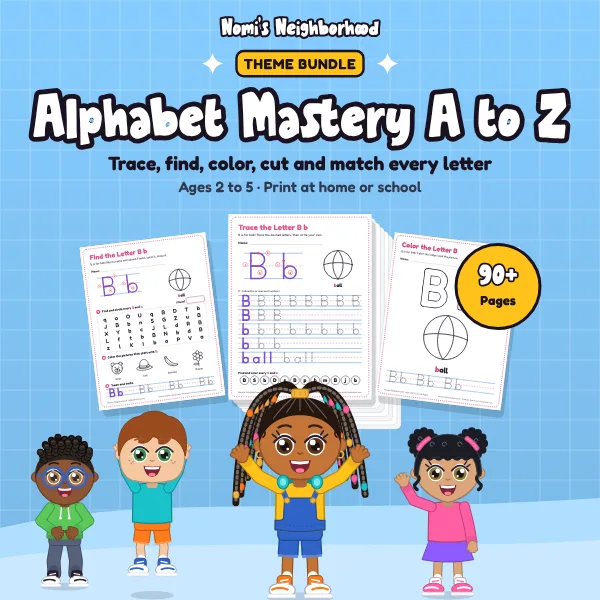
Coloring pages are a calm center option. As kids color, ask questions: "What letter is this? Whose name starts with it? What picture is on the page?" Coloring with talk turns a quiet activity into real learning.
Letter Recognition Activities for Small Groups
Small groups are the best place to check who knows what and give extra practice.
- Letter flip. Lay letter cards face down. Kids flip one and name it. If they know it, they keep it.
- Swat the letter. Spread letters on the table. Call one out and kids swat it with a fly swatter.
- Find your friend. Give each child a letter. They find the classmate with the matching uppercase or lowercase.
- Letter bingo. Use small bingo cards with 6 to 9 letters for younger kids.
- Name puzzles. Cut a child's name into letter pieces and let them rebuild it.
Keep groups short, around 10 minutes, and focus on just a few letters at a time.
Letter Recognition by Age
- Age 2–3: Exposure and fun. Point out letters on signs and books. Focus on the first letter of their name. No pressure to name all 26.
- Age 3–4: Many kids start naming a handful of letters, especially from their name and family names. Matching games work well.
- Age 4–5: Kids are often ready to name most uppercase letters and many lowercase ones, and to start linking letters with sounds.
Every child's timeline is different. Use these as loose guides, not checklists.
Moving From Letters to Sounds
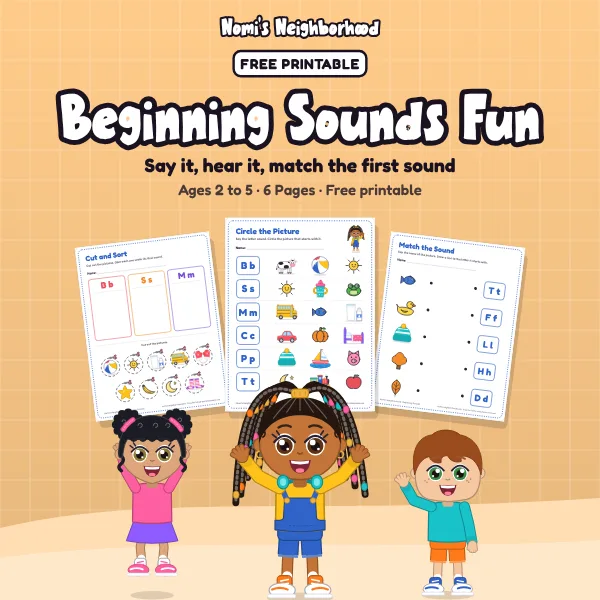
Once a child recognizes a letter, the next step is knowing its sound. Many of the games above work for sounds too. Just switch "What letter is this?" to "What sound does it make?"
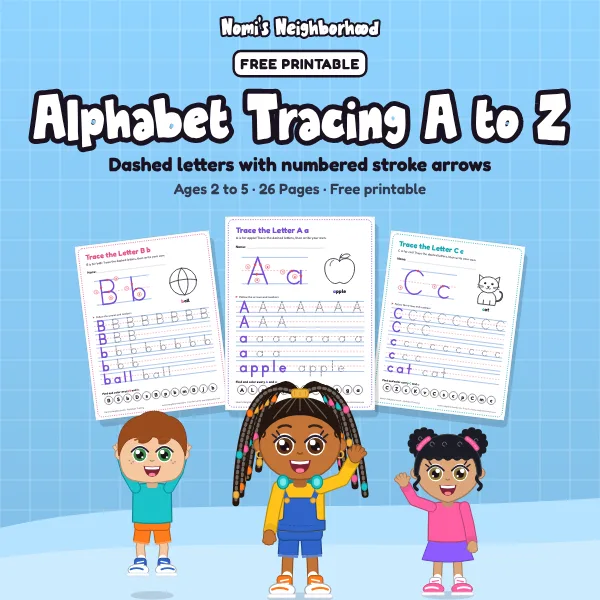
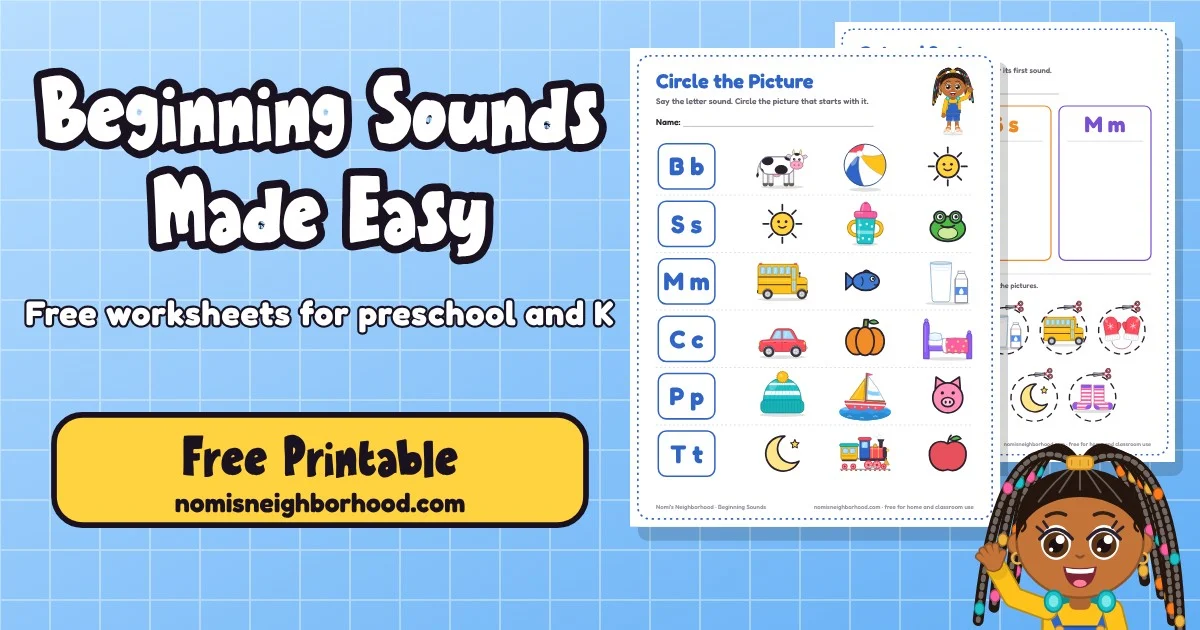
Our guide to beginning sounds worksheets walks through how to teach letter sounds in a clear order. When kids are ready to start forming letters, our free alphabet tracing worksheets give them dashed letters to trace on handwriting lines, with numbered arrows that show where to start.
Common Letter Mix-Ups (and What Helps)
- b and d: Teach them on different weeks. Use the word "bed" as a picture clue, where b and d look like the bedposts.
- M and W: Talk about mountains (M) and waves (W).
- n and h: Point out that h has a "tall back."
- p and q: Keep these apart in your plan and review each on its own first.
Letter reversals and mix-ups are very common in preschool. Gentle, repeated practice is usually all that is needed.
Keep It Joyful
The kids who love letters are the ones who meet them through play. Celebrate small wins, like a child spotting their letter on a cereal box. Make letters part of the room, the songs and the games, and recognition will grow.
For a personal twist, try our name tracing for preschool ideas. Names are a natural way to practice letter recognition every single day.
Alphabet Coloring Pages
Download FreeFAQ
What age should a child recognize letters?
Many children begin recognizing a few letters around age 3, often starting with letters in their name. By age 5, many kids know most uppercase letters. There is a wide range of normal, so focus on steady practice.
Should I teach uppercase or lowercase letters first?
Many teachers introduce both together since kids see both in books. Uppercase letters are often easier to tell apart, so they may come first naturally. Lowercase letters matter most for reading, so keep them in the mix.
What order should I teach letters in?
There is no single correct order. Many teachers start with letters in children's names or with common letters like s, a, t, m, p and n. Avoid teaching easily confused letters like b and d close together.
How do I help a child who keeps forgetting letters?
Focus on just two or three letters at a time, review them daily with games, and connect them to names and favorite words. Short, frequent practice works better than long sessions.