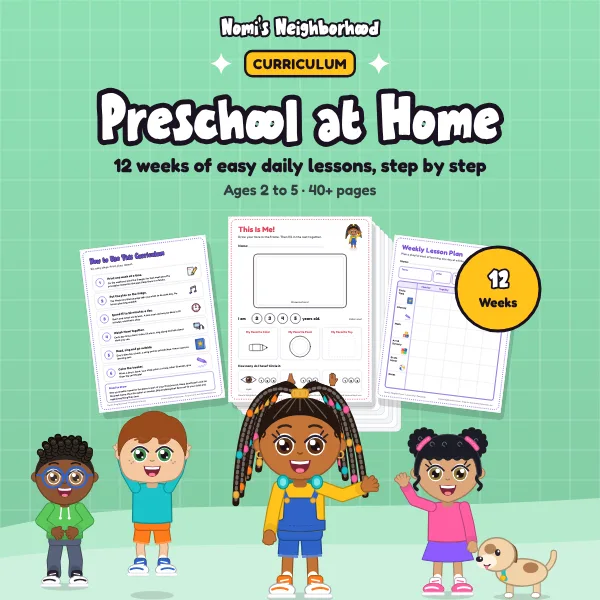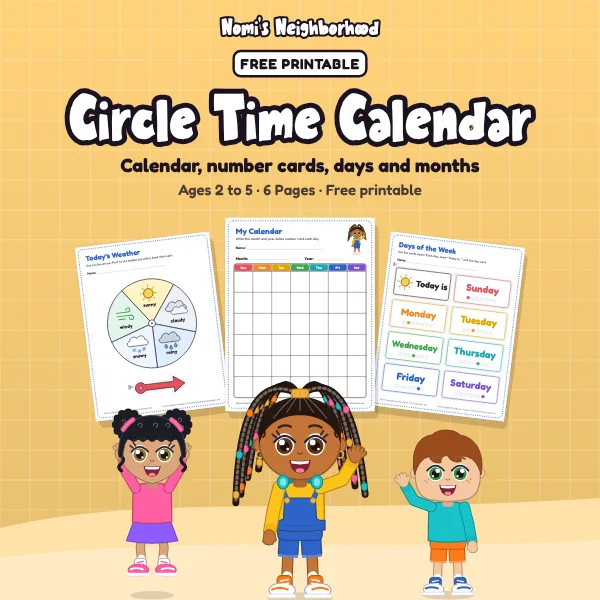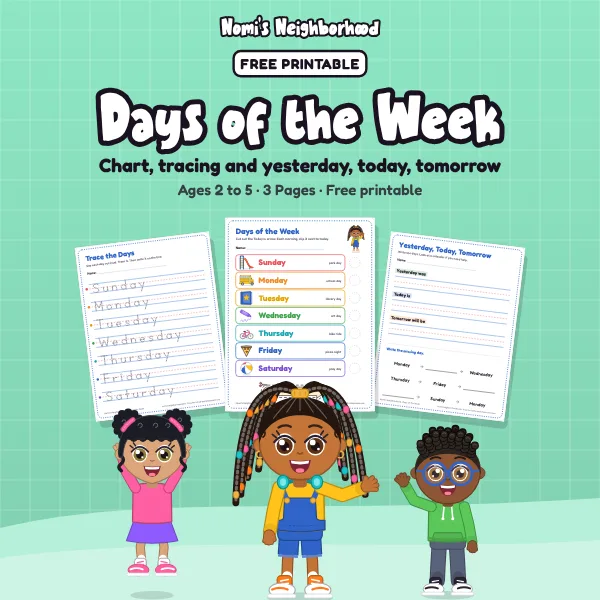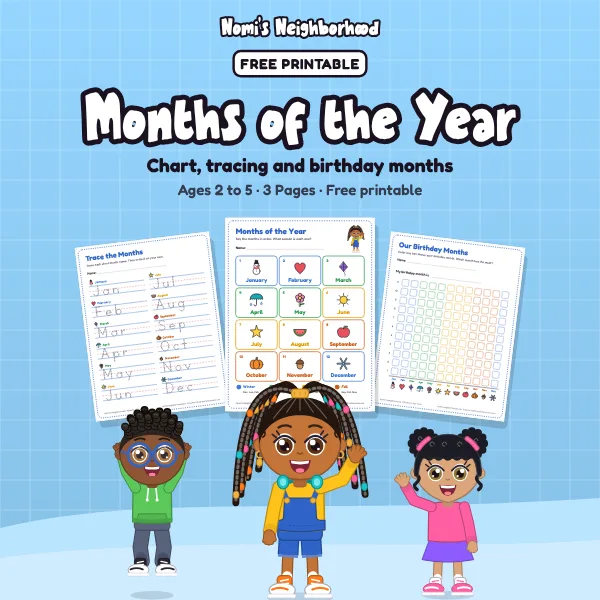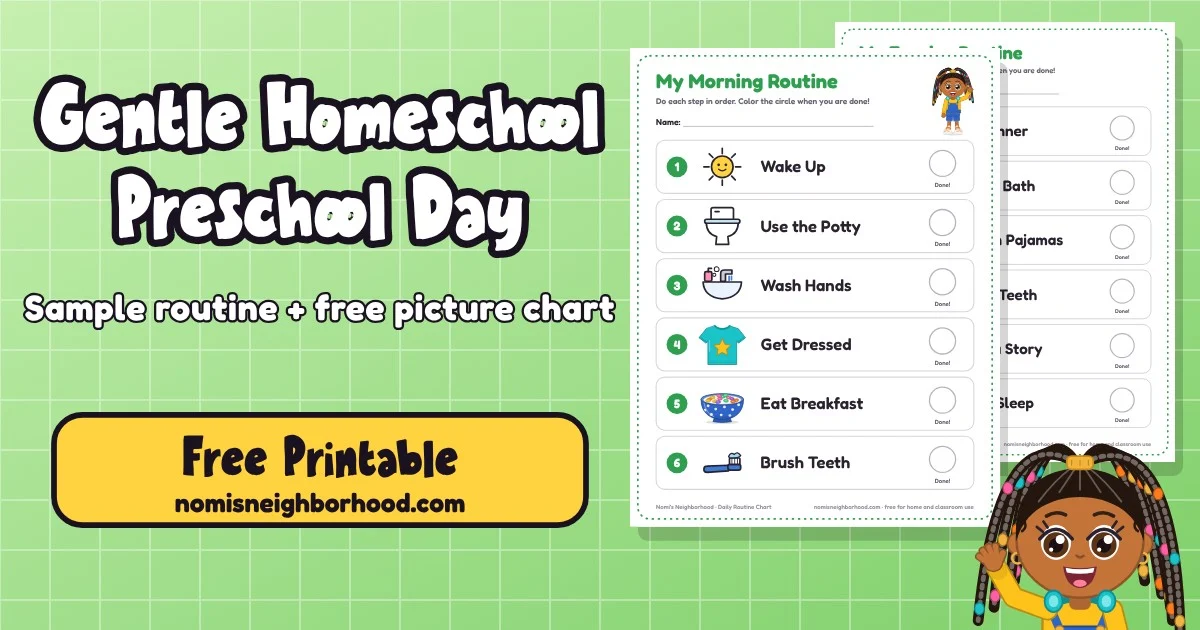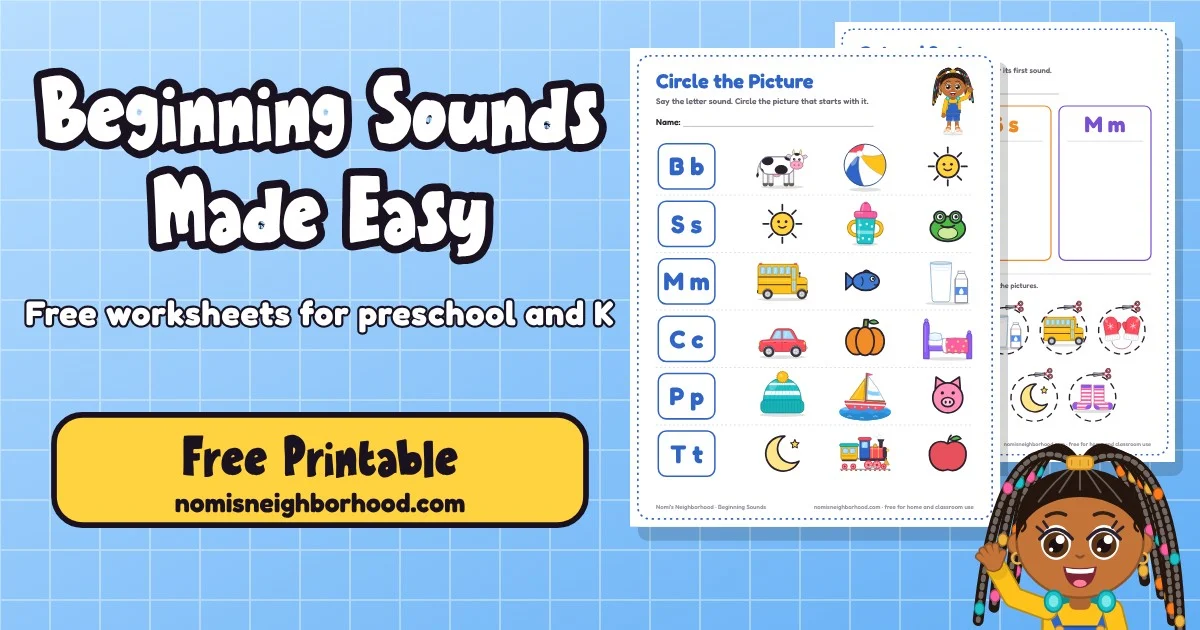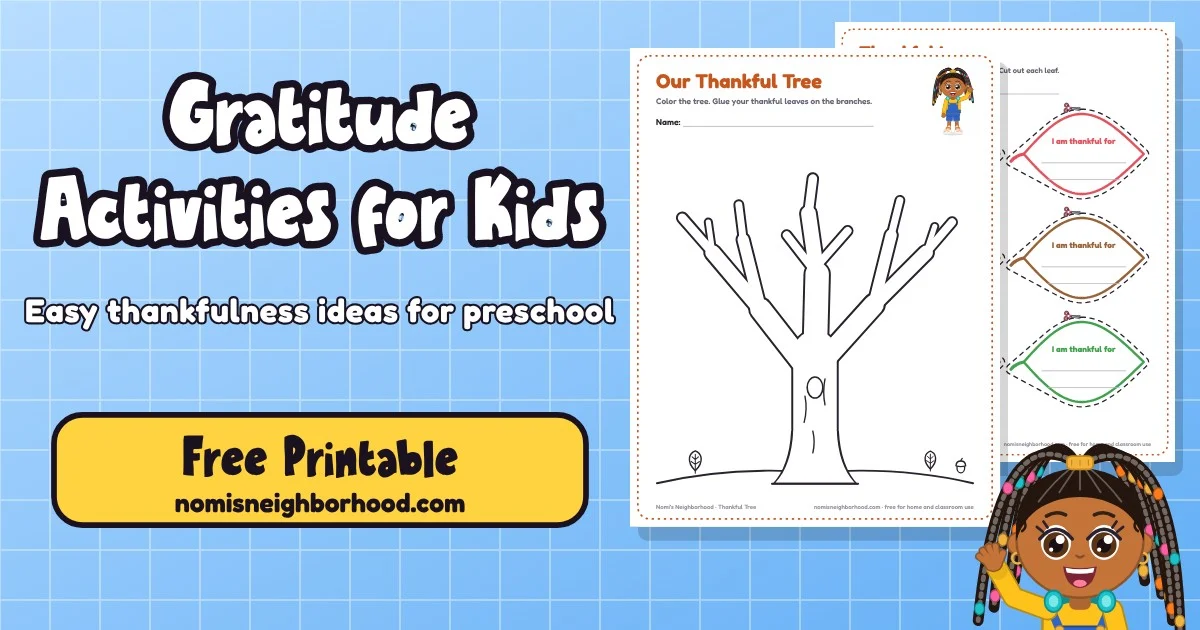
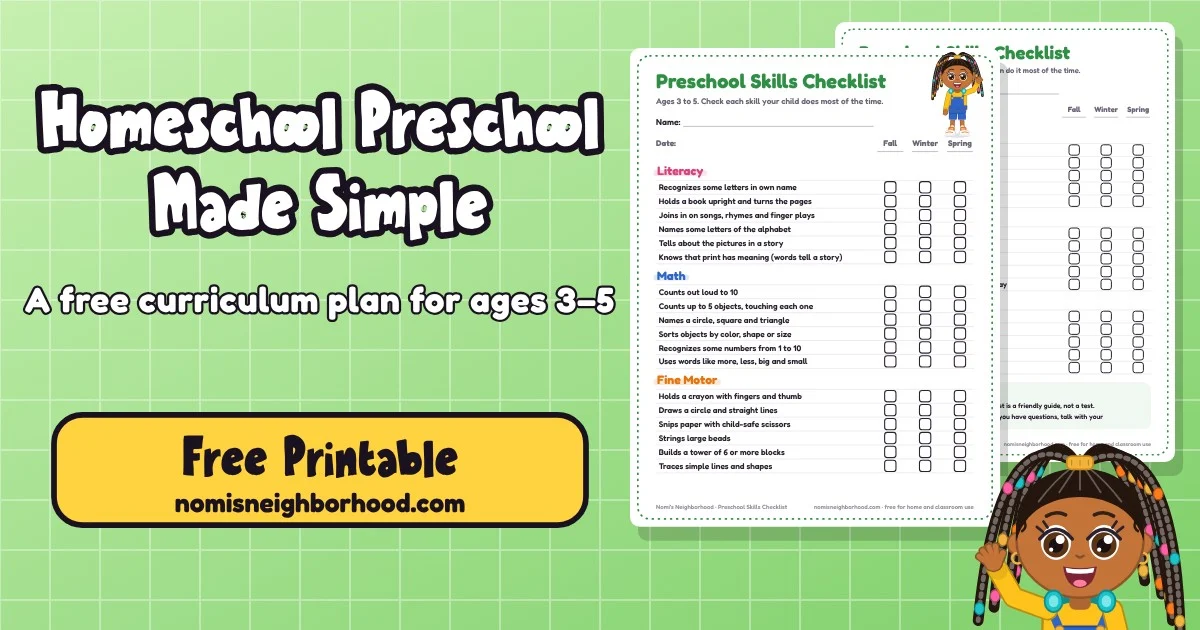
A simple homeschool preschool curriculum covers six areas: early literacy, early math, fine motor skills, gross motor play, social-emotional skills, and the world around them. For ages 3 to 5, that means about 15 to 45 minutes of guided learning a day, built around books, play and real life. You do not need a boxed program to do it well.
Preschool at home is less about worksheets and more about rhythm. Read together, count things, play outside, talk a lot. Add a little structure, and you have a curriculum.
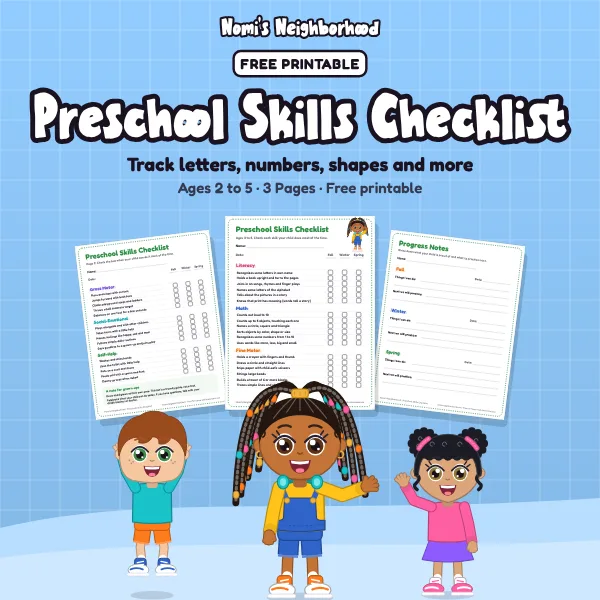
Preschool Skills Checklist
Download FreeWhat to Teach in Homeschool Preschool
Think of your plan in six simple buckets. You do not need to hit all of them every day. Aim to touch each one over the course of a week.
1. Early Literacy
- Reading aloud every day
- Letter recognition, starting with your child's name
- Beginning letter sounds
- Rhyming games and songs
- Retelling a story in their own words
2. Early Math
- Counting objects (1 to 10, then to 20)
- Recognizing numerals
- Shapes and colors
- Sorting and simple patterns
- Comparing: more, less, bigger, smaller
3. Fine Motor Skills
- Coloring, drawing and painting
- Playdough, stringing beads, using tongs
- Cutting with child-safe scissors
- Pre-writing lines, then tracing letters
4. Gross Motor Play
- Running, jumping, climbing and balancing
- Throwing and catching a ball
- Dancing and movement songs
5. Social-Emotional Skills
- Naming feelings
- Taking turns and sharing
- Following simple directions
- Helping with small chores
6. The World Around Them
- Nature walks and weather
- Community helpers
- Simple science like sink or float
- Seasons and holidays
How Much Time Does Homeschool Preschool Take?
Less than most parents expect. Young kids learn in short bursts.
- Age 3: About 15 to 20 minutes of guided activities, spread through the day.
- Age 4: About 20 to 30 minutes.
- Age 5 (pre-K): About 30 to 45 minutes, sometimes with a short sit-down block.
Everything else, like play, books, outdoor time and helping you cook, is learning too. Short and happy beats long and frustrated every time.
A Simple Weekly Homeschool Preschool Plan
Here is a sample week you can copy and adjust. Pick one letter, one number and one theme per week to keep planning easy.
Example week: Letter B, number 3, theme "Fall Leaves"
- Monday: Read a fall book. Go on a leaf walk and count three leaves. Introduce the letter B.
- Tuesday: Sort leaves by color. Make B with playdough. Practice a "B" sound hunt around the house.
- Wednesday: Leaf rubbings with crayons. Count groups of three. Trace dashed B's on handwriting lines.
- Thursday: Make a simple leaf pattern (red, yellow, red, yellow). Read the book again and ask your child to retell it.
- Friday: Fun day. Bake something together, measure and count. Review B and the number 3 with a game.
Each day takes about 20 to 30 minutes of focused time. The rest is play.
If you want help fitting this into your day, our homeschool preschool schedule post shares a gentle daily routine, and our homeschool planner printable guide makes weekly planning quick.
Do You Need a Boxed Curriculum?
Not necessarily. Some families love an all-in-one program because it saves planning time. Others prefer to build their own with library books and printables. Both can work.
A homemade plan is often enough if you:
- Read aloud every day
- Have a loose weekly theme
- Use a skills checklist to make sure you cover the basics
- Keep a few hands-on materials on hand (crayons, playdough, blocks, scissors)
If you do buy a program, choose one that is play-based and flexible. Preschoolers are not ready for long seat work.
Homeschool Preschool by Age
Homeschool Preschool for 3-Year-Olds
At three, keep it almost entirely play-based. Focus on talking, reading, songs and hands-on exploring. Introduce letters through your child's name and count everything. Fine motor work like playdough and stickers is perfect at this age.
Homeschool Pre-K for 4-Year-Olds
Four-year-olds often enjoy a little more structure. Try a short "learning time" each morning with a book, one letter activity and one math game. Many 4-year-olds are ready for pre-writing strokes and tracing simple letters.
Homeschool Pre-K for 5-Year-Olds
Five-year-olds may be ready for beginning sounds, writing their name, counting to 20 and simple patterns. This is a good time to check skills that will help in kindergarten. Our kindergarten readiness checklist is a helpful guide.
Materials That Make Homeschool Preschool Easy
You do not need much. A basic kit covers almost everything:
- Crayons, washable markers and paper
- Playdough and simple tools
- Child-safe scissors and glue sticks
- Blocks, counters or small toys for counting
- Picture books (the library is your best friend)
- Printables for tracing, coloring and counting
- A small bin or shelf to keep it all together
Keep materials where you can grab them fast. When setup takes two minutes instead of twenty, you are far more likely to actually do the activity.
Using Videos as Part of Your Plan
Short, gentle learning videos can be a nice add-on, especially for songs and review. Watching together and talking about it afterward makes it more meaningful. Nomi's episodes like "Welcome to My Neighborhood" cover colors, counting and shapes, so they can fit right into a math theme week. You can watch Nomi on YouTube and follow up with a hands-on activity.
How to Track Progress Without Stress
Preschool is not about grades. Still, it helps to know what your child has mastered and what needs more play.
- Keep a simple skills checklist and update it once a month.
- Save a few drawings or tracing pages in a folder to see growth.
- Notice skills in everyday life, like counting forks or naming letters on signs.
- Follow your child's lead. If they are not ready for something, put it aside and try again in a few weeks.
Every child develops on their own timeline. Progress, not perfection, is the goal.
Preschool Skills Checklist
Download FreeFAQ
What should a homeschool preschool curriculum include?
A good homeschool preschool curriculum includes early literacy, early math, fine and gross motor skills, social-emotional skills, and exploring the world. Daily read-alouds and hands-on play should be at the center.
How many hours a day is homeschool preschool?
Most preschoolers only need about 15 to 45 minutes of guided learning a day, depending on age. The rest of the day can be play, outdoor time, books and everyday routines.
Can I homeschool preschool for free?
Yes. Many families use library books, free printables, nature walks and household items. A simple skills checklist helps you make sure you cover the basics without buying a program.
What age should you start homeschool preschool?
Many families start a light preschool routine around age 3. Before that, everyday talking, reading and play are plenty. Start when your child seems curious and ready, and keep it gentle.