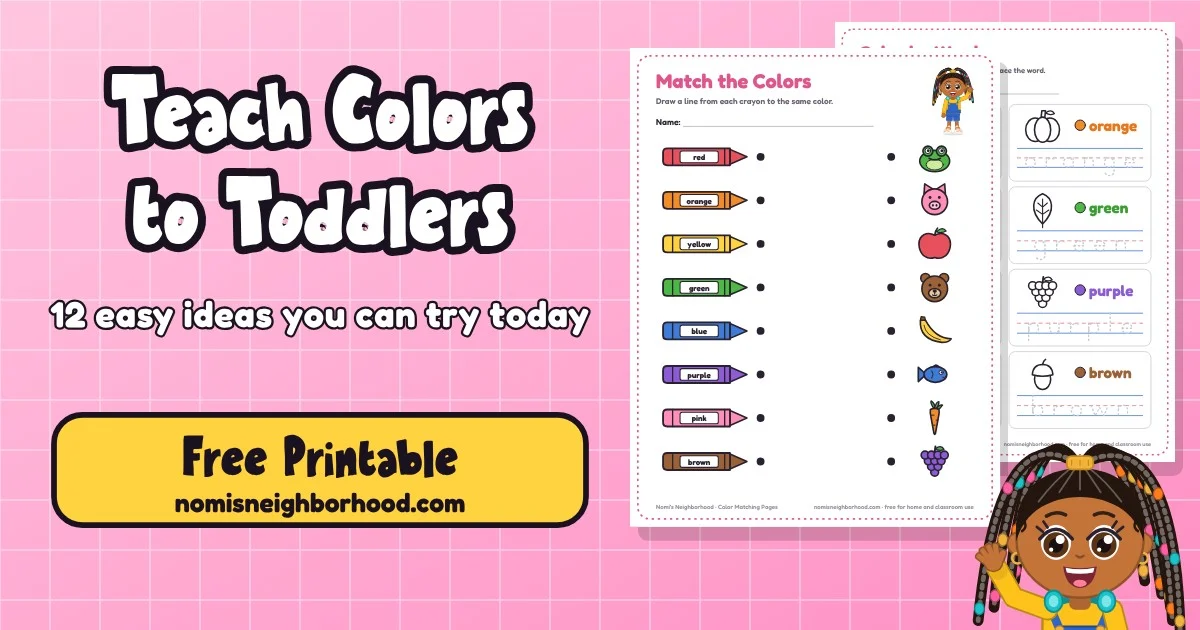
If you want to know how to teach colors to toddlers, the easiest way is to start with one or two colors, name them often during everyday play, and use lots of matching and sorting before asking your child to say the color name. Toddlers learn to match colors first, then point to a color when you name it, and later say the color word themselves. Below are 12 simple ideas to make it fun, plus tips for ages 2, 3 and up.
Colors are everywhere, which makes them one of the easiest things to teach during your normal day. No flash cards needed.
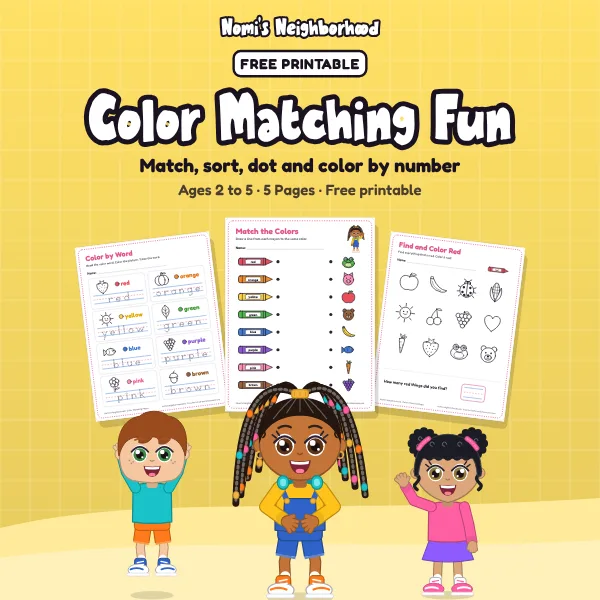
Color Matching Worksheets
Download FreeWhen Do Toddlers Learn Colors?
Every child is different, but many follow a similar path:
- Matching: Putting a red block with another red block. Many toddlers can do this before age 2 or around it.
- Pointing: Finding "the blue one" when you ask. This often comes next.
- Naming: Saying "green" when you point to something green. Many children start naming a few colors between ages 2 and 3, and know the main colors by around 3 or 4.
If your toddler mixes up colors or calls everything "blue," that's normal. Learning color words takes time and lots of repeats.
Tips Before You Start
- Start with one or two colors. Red and blue are a great pair because they look so different.
- Use the color word as a describing word. Say "the red ball" instead of just "red."
- Match before you name. Matching builds the idea of color before kids need the word.
- Keep it playful. If it feels like a quiz, toddlers will lose interest.
- Repeat, repeat, repeat. The same game ten times is how learning happens.
12 Fun Ways to Teach Colors to Toddlers
1. Color of the Day
Pick one color each day. Wear something that color, eat a snack that color and find toys that color. Talk about it all day.
2. Color Hunt
Give your toddler a basket and ask them to find everything red in a room. Celebrate each find. Then try a new color tomorrow.
3. Muffin Tin Sort
Put a colored paper circle in each cup of a muffin tin. Your toddler sorts pom-poms, blocks or toy cars into the matching cups. Supervise closely with small items.
4. Sock and Laundry Sort
Sort clean socks or shirts by color while you fold laundry. It's real-life learning and you get a helper.
5. Color Matching Cards
Make simple cards with color circles and let your toddler match small toys or crayons to each card. Printable matching worksheets work great here too.
6. Snack Rainbow
Line up snacks by color, like strawberries, orange slices, banana, cucumber and blueberries. Name each color as your child eats. Always cut food into safe sizes for your child's age.
7. Paint Mixing
Put a blob of yellow and a blob of blue paint inside a zip-top bag, seal it and let your toddler squish them together. Watch them turn green. No mess, lots of wow.
8. Colored Water Play
Add a few drops of food coloring to cups of water. Give your child a turkey baster or a cup to pour and mix. Name the colors as they change.
9. Car Wash Colors
Line up toy cars and "wash" them one color at a time. "Now we wash the red car!"
10. Color I Spy
Play a simple version of I Spy: "I spy something yellow." Give lots of hints for younger toddlers.
11. Color Songs and Videos
Songs help color words stick. Sing about colors during bath time or in the car. A short learning video can help too, as long as you watch together and talk about it. Nomi's "Rainy Day Puddles" episode walks through rainbow colors, and "Grandma Pearl's Garden" has lots of colorful flowers and veggies. You can watch Nomi on YouTube and then go on a color hunt to match what you saw.
For more on choosing good screen time, see our list of the best learning videos for toddlers.
12. Color Books
Read simple picture books about colors. Pause and ask, "Can you find something blue on this page?" Let your child point before you say the answer.
Teaching Colors by Age
Age 2
Focus on matching and sorting with two colors at a time. Say color words constantly in everyday talk. Don't quiz. Just name and describe.
Age 3
Add more colors and start asking your child to point to or name a color. Play color I Spy and color hunts. Mix in simple matching worksheets.
Ages 4–5
Most kids know the main colors by now. Add light and dark shades, color mixing experiments and rainbow order. Kids this age love being the one who asks the I Spy questions.
Mistakes to Avoid When Teaching Colors
- Too many colors at once. Start small and add slowly.
- Quizzing too much. "What color is this?" over and over can feel like pressure. Mix in more naming and fewer questions.
- Correcting harshly. If your child says "blue" for green, try: "That one is green. Green like the grass."
- Only using flash cards. Real objects and play stick much better for toddlers.
Pair Colors With Other Skills
Colors are a great bridge to other early learning. Count the red cars. Sort shapes by color. Make a pattern with red and blue blocks. Our post on shape activities for preschool has ideas that combine shapes and colors in one game.
For even more everyday ideas, see our list of toddler learning activities at home.
If You Have Concerns
If your child seems to have a hard time telling certain colors apart as they get older, mention it to your pediatrician. They can help you figure out next steps.
Color Matching Worksheets
Download FreeFAQ
What age should a toddler know colors?
Many toddlers can match colors around age 2 and start naming a few colors between 2 and 3. Most children know the main colors by around 3 or 4, but every child learns at their own pace.
What colors should I teach my toddler first?
Start with one or two colors that look very different, like red and blue. Once your child knows those, add yellow and green, then the rest.
Why does my toddler call every color the same name?
It's very common for toddlers to use one color word for everything while they're learning. Keep naming colors in everyday talk, and the right words usually come with time and practice.
How do I teach colors without flash cards?
Use real objects and play: color hunts, sorting toys into muffin tins, snack rainbows, paint mixing in a bag and color I Spy. These hands-on games help color words stick.
Two More Everyday Color Games
Give a Color Clue
Try color I Spy while waiting together. Say, “I spy something orange,” then let your child point or give you a clue. Skip anything distracting when you need to watch the road.
Read and Point
Open a familiar picture book and look for one color together. Your child can point before learning the color word. A few calm minutes are enough, and you can return to the same page tomorrow.