Fine motor activities for toddlers are games that build the small muscles in the hands and fingers, like squeezing playdough, peeling stickers, pushing pom-poms through a hole or picking up cereal. You can do almost all of them with household items like containers, tape, clothespins and kitchen tongs. These skills help toddlers feed themselves, get dressed and, later, hold a crayon and cut with scissors.
Fine motor play doesn't need to look like "school." Most of it looks like your toddler playing at the kitchen table while you cook.
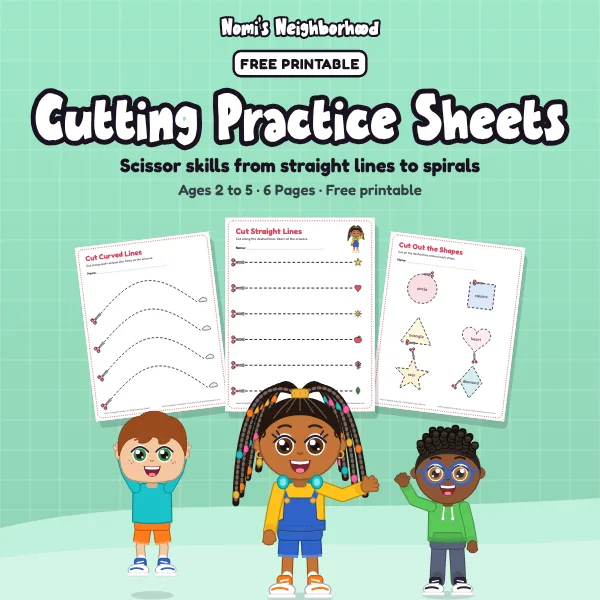
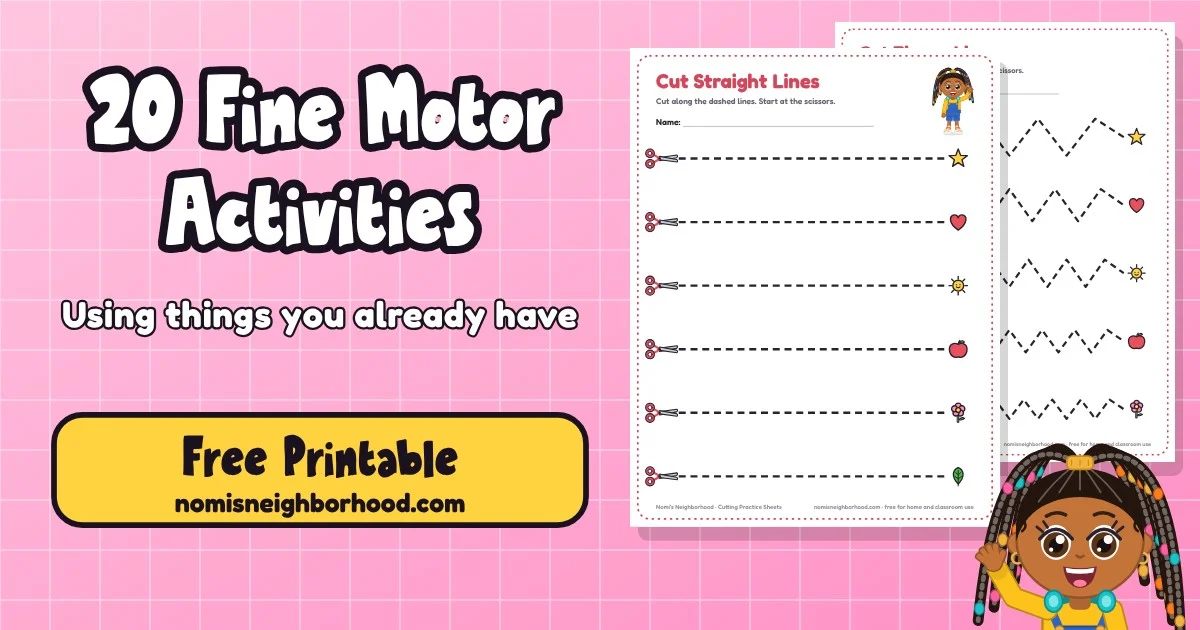
Cutting Practice Sheets
Download FreeWhat Are Fine Motor Skills?
Fine motor skills are the small, careful movements we make with our hands and fingers. They include:
- Pinching small things between the thumb and pointer finger
- Grasping and holding a crayon or spoon
- Using both hands together, like holding paper while the other hand draws
- Hand strength, for squeezing and pressing
- Wrist control, for turning and twisting
These skills come before writing. A toddler who builds strong, steady hands now will have an easier time with tracing and letters later.
Safety First
Many fine motor activities use small items. Always stay close and watch your toddler. Skip anything small enough to be a choking risk if your child still puts things in their mouth, and swap in larger items instead.
Easy Fine Motor Activities With Household Items
Squeezing and Pressing
- Playdough play. Roll, squish, poke and pinch. Add a plastic knife, rolling pin or cookie cutters.
- Sponge squeeze. Fill two bowls, one with water. Your toddler soaks a sponge and squeezes it into the empty bowl.
- Spray bottle watering. Give your child a small spray bottle to "water" plants or wash a window. Squeezing the trigger builds hand strength.
- Bath toy squirters. Squeezing rubber bath toys is fine motor practice in disguise.
Pinching and Picking Up
- Pom-pom drop. Cut a hole in a container lid. Your toddler pushes pom-poms through it.
- Cereal pick-up. Let your toddler pick up cereal pieces one at a time and drop them in a cup.
- Clothespin clip. Clip clothespins onto the edge of a box or paper plate. Start by letting your child pull them off, which is easier, then try putting them on.
- Tong transfer. Use kitchen tongs or salad tongs to move pom-poms or cotton balls from one bowl to another.
Peeling and Pulling
- Sticker play. Peeling stickers takes a careful pinch. Let your child stick them on paper, a box or along a drawn line.
- Tape rescue. Tape small toys to a tray with painter's tape. Your toddler peels it off to "rescue" them.
- Scarf pull. Stuff scarves or fabric scraps into an empty tissue box and let your toddler pull them out.
Threading and Stacking
- Pasta threading. String large dry pasta like rigatoni onto a pipe cleaner or a shoelace with tape on the end.
- Straw drop. Push straws or pipe cleaners into the holes of an upside-down colander.
- Block towers. Stack blocks or cups as high as they can go.
Twisting and Turning
- Lids on, lids off. Give your toddler a few clean plastic containers with screw-top lids.
- Pouring practice. Pour dry rice or water between cups. Spills are part of the learning.
- Turning book pages. Board books are great for practicing page turns.
Drawing and Painting
- Chunky crayons on big paper. Tape paper to the table or wall so it doesn't slide.
- Finger painting. Great for messy fun and building finger control.
- Broken crayons. Small crayon pieces push kids toward a pinch grip naturally.
Drawing lines and circles is the next step after this kind of play. Our guide to pre-writing strokes for toddlers shows you how to build on it.
Scissor Skills for Toddlers
Many kids are ready to try child-safe scissors somewhere around age 2½ to 3, with an adult right beside them. Every child is different, so watch for interest and steady hands. Here's a gentle way to start:
Step 1: Practice Tearing First
Tearing paper strips builds the same two-hands-working-together skill kids use for cutting.
Step 2: Use Tongs or Squeeze Toys
Opening and closing tongs mimics the scissor motion.
Step 3: Teach "Thumbs Up"
Show your child how to hold scissors with the thumb on top, pointing up. A simple phrase helps: "Thumb on top, like a thumbs up."
Step 4: Start With Snips
Give them a narrow strip of cardstock or paper. One snip cuts a piece off, which feels like a big win.
Step 5: Move to Straight Lines
Once snipping is easy, try cutting along a short, thick straight line.
Step 6: Add Curves and Zigzags
Ages 4 to 5 can usually try gentle curves, zigzags and simple shapes.
Cutting practice sheets that go from short snips to longer lines make this progress easy to follow.
Fine Motor Activities by Age
Age 2
Focus on big, simple actions: playdough squishing, stacking blocks, pom-pom drops, sticker play and scribbling with chunky crayons.
Age 3
Add clothespins, tongs, pasta threading, pouring and early snipping with child-safe scissors. Many 3-year-olds also enjoy simple puzzles with knobs.
Ages 4–5
Try cutting along lines and curves, lacing cards, building with small blocks and tracing dashed lines and letters. Our post on how to teach a toddler to write letters covers the next steps.
Make It Part of Your Day
You don't need a special "fine motor time." Try:
- Letting your toddler help snap peas or tear lettuce while you cook
- Having them press buttons and pull zippers when getting dressed
- Letting them peel a banana or clementine (with a starter tear from you)
- Giving them a spray bottle at bath time
Fine motor play also mixes well with other skills. Count the pom-poms as they drop. Name the colors of the clothespins. For more ideas that blend skills, see our list of toddler learning activities at home.
A Little Screen Time, Then Hands On
If your toddler enjoys a short learning video, try pairing it with a hands-on follow-up. After watching Nomi's "Shape Bounce," you could roll playdough snakes into the shapes from the song. You can watch Nomi on YouTube, then head to the table to build.
When to Check In
Every toddler develops at their own pace. If you have questions about your child's hand skills, your pediatrician is a good person to ask.
Cutting Practice Sheets
Download FreeFAQ
What are fine motor skills for a 2-year-old?
Common fine motor skills at age 2 include stacking a few blocks, scribbling with a crayon, turning board book pages, putting objects into containers and starting to use a spoon.
When can a toddler use scissors?
Many children are ready to try child-safe scissors with close adult help around age 2½ to 3. Start with tearing paper and snipping narrow strips before cutting along lines.
What household items help fine motor skills?
Playdough, clothespins, kitchen tongs, painter's tape, stickers, sponges, spray bottles, empty containers with lids, dry pasta and pipe cleaners all make great fine motor tools.
How do fine motor skills help with writing?
Writing needs strong, steady hands and good finger control. Activities like pinching, squeezing and drawing build those muscles, which helps kids hold a crayon and control their lines later.